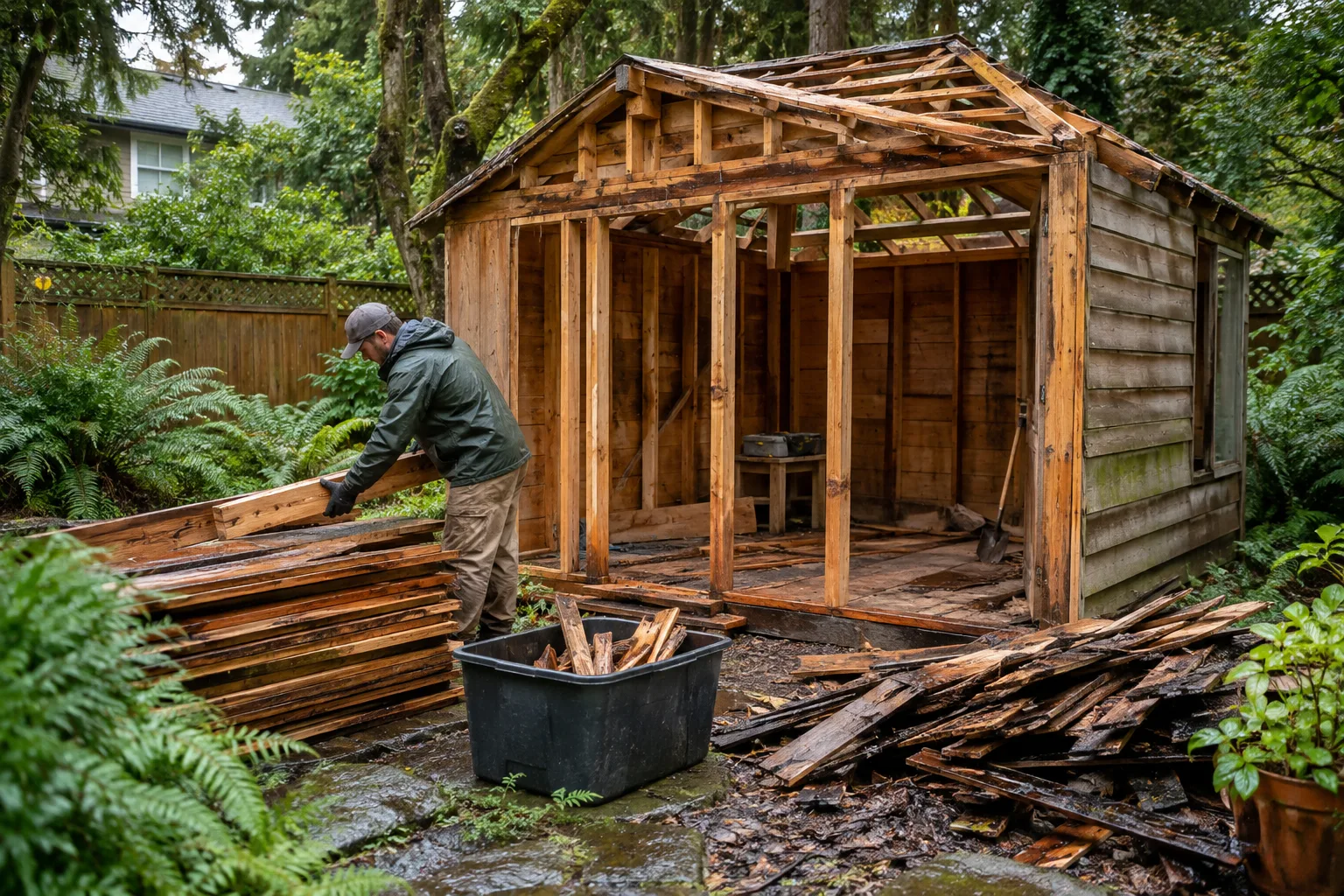
A good shed-removal plan documents the structure, access, connections, contents and material risks before scheduling. The exact details below help turn a rough request into a useful scope.
Wood condition changes the sequence
Sound framing can often be taken down in predictable sections. Rot, insect damage or a sagging roof can make the structure unstable, so the crew may need a slower sequence and a larger exclusion zone.
Metal condition changes handling
Modular metal sheds may separate into panels and rails. Rusted fasteners, bent sheet metal and sharp edges make controlled staging important. Mixed plastic, wood and roofing parts also need to be identified.
Recycling depends on the exact material
Receiving rules distinguish clean wood from painted or treated wood. Scrap metal can have its own acceptance conditions. Ask where each material type can go rather than assuming the entire shed is recyclable.
Photos improve the first conversation
Send one full view, close-ups of damaged areas, the roof, the base and the route to the street. Those images help separate a straightforward disassembly from a job that needs a detailed site review.
Save this checklist
Details to collect
- Framing or panel material
- Roof and siding condition
- Fastener corrosion
- Mixed materials
- Foundation type
- Access width and staging area
Sources and local checks
For current rules, see the City of Edmonds permit process, Washington L&I asbestos guidance, and the receiving facility that will handle the actual load.
Related service
Wood Shed Removal
Dismantling and hauling planned around wood framing, siding, roofing and fasteners.
See service details