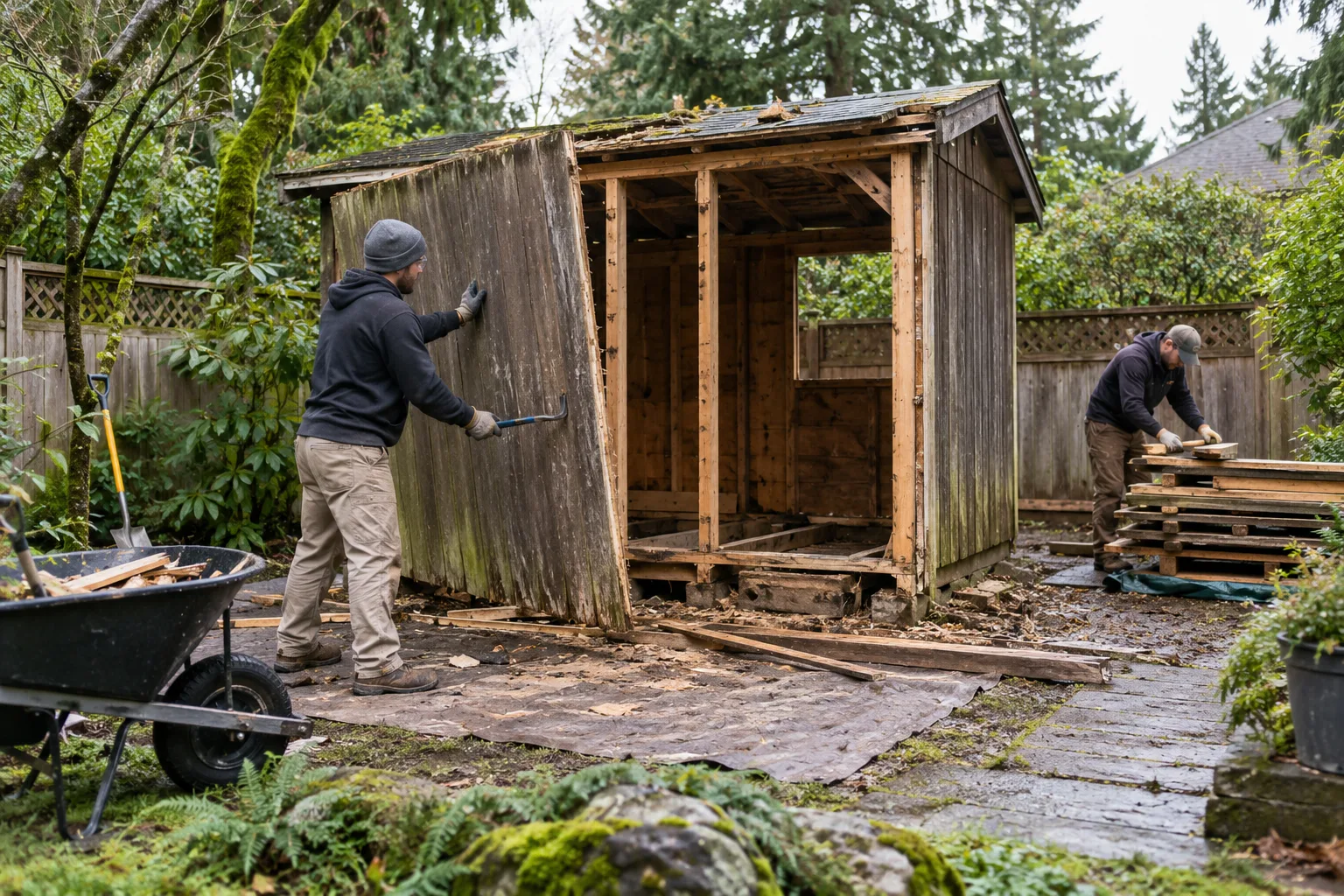
A good shed-removal plan documents the structure, access, connections, contents and material risks before scheduling. The exact details below help turn a rough request into a useful scope.
Confirm the permit rule for this structure
Edmonds states that demolition permits are required except for certain one-story residential accessory structures no larger than 200 square feet and outside defined sensitive areas. Treat that as a screening rule, not blanket approval. The property owner should confirm current requirements with the city.
Trace every utility
Look for electrical conduit, extension wiring, plumbing, gas service and irrigation near the base. A disconnected light switch does not prove a circuit is dead. Qualified help may be needed before demolition.
Do not guess about suspect materials
Washington L&I says materials that could be disturbed in demolition must be evaluated for asbestos. Roofing, siding, floor products, caulk and other components can be suspect. Stop and get the required inspection or records before disturbing them.
Write exclusions into the estimate
An estimate should say whether it includes contents, slab, footings, fencing, vegetation, hazardous material handling and final grading. A clear exclusion is more useful than a vague promise.
Save this checklist
Details to collect
- Permit status confirmed
- Electrical and plumbing status known
- Material inspection records available
- Contents removed
- Foundation scope written
- Parking and staging plan agreed
Sources and local checks
For current rules, see the City of Edmonds permit process, Washington L&I asbestos guidance, and the receiving facility that will handle the actual load.
Related service
Shed Demolition
Planned dismantling for sheds that cannot be moved or hauled intact.
See service details