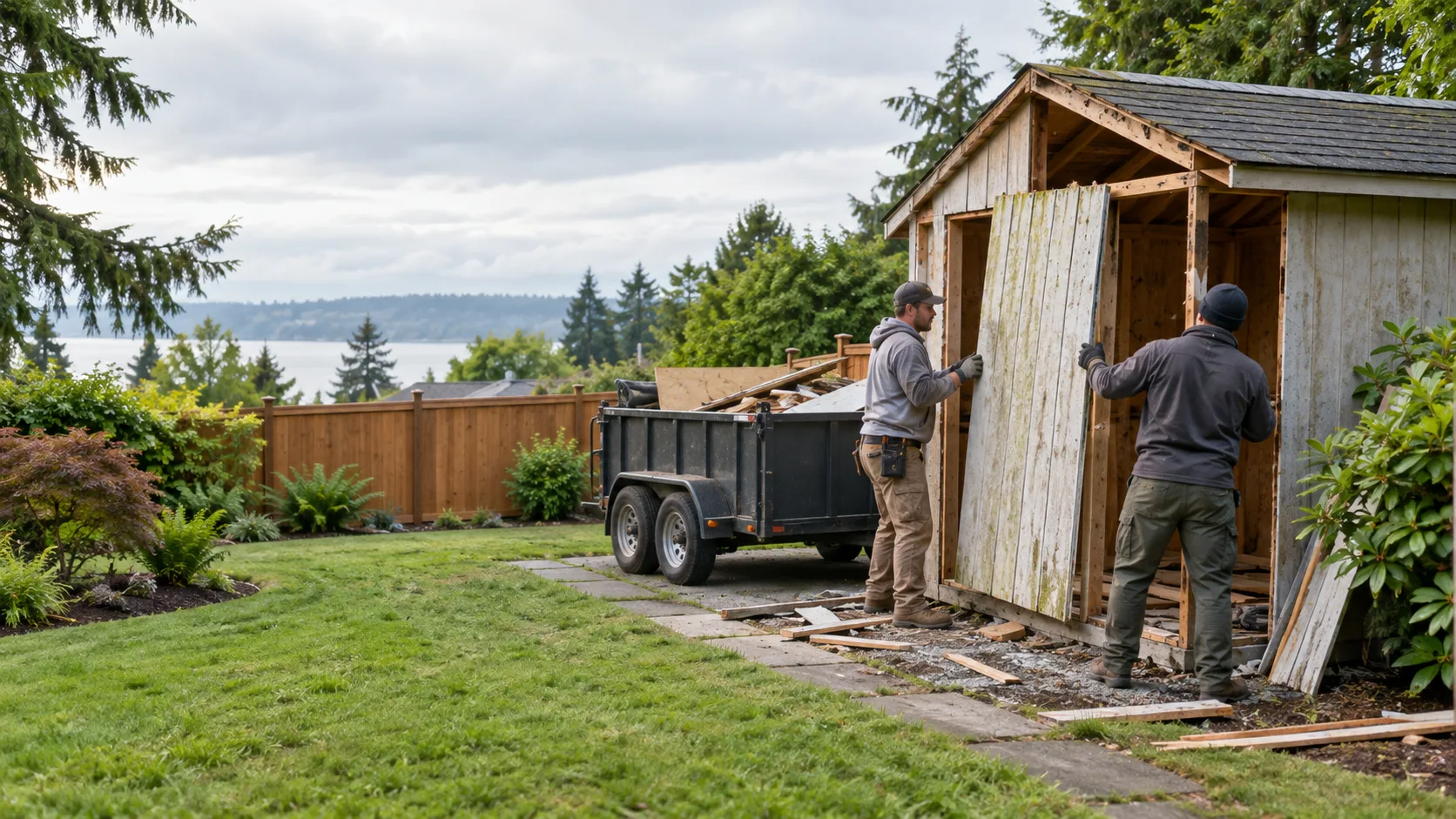
A good shed-removal plan documents the structure, access, connections, contents and material risks before scheduling. The exact details below help turn a rough request into a useful scope.
Start with what is inside
Remove personal belongings, documents and anything you plan to keep. Set aside fuel, propane cylinders, paint, pesticides, batteries and unknown liquids; these need separate instructions rather than ordinary debris handling.
Measure the route, not only the shed
Record the shed width and length, then measure the narrowest gate or passage. Note steps, slopes, soft ground, overhead branches and the distance to legal truck parking. Photos from the shed toward the driveway are often more useful than a close-up of one wall.
Identify connections and the base
Do not assume old wiring or plumbing is inactive. Note visible conduits, outlets, water lines, anchors, skids, pavers and concrete. A slab or footing changes the scope and should never be treated as automatically included.
Check local requirements
The City of Edmonds publishes a demolition permit handout. Some small one-story residential accessory structures may qualify for an exemption, but site conditions and current rules still matter. Confirm your property before work begins.
Save this checklist
Details to collect
- Shed width, length and height
- Construction material and roof type
- Photos of all four sides
- Narrowest access measurement
- Contents and restricted items
- Foundation and utility notes
Sources and local checks
For current rules, see the City of Edmonds permit process, Washington L&I asbestos guidance, and the receiving facility that will handle the actual load.
Related service
Shed Removal
A single plan for dismantling, loading and clearing an unwanted shed.
See service details